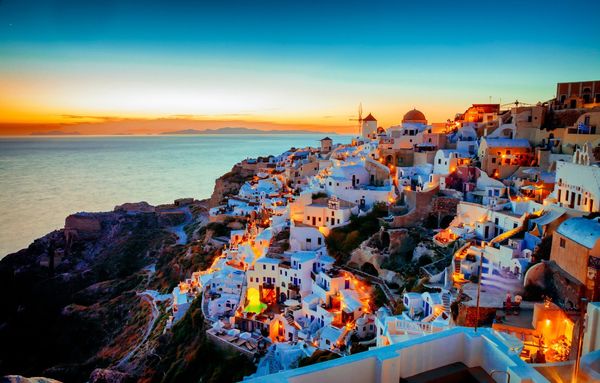


Mykonos vs Santorini: Which Island Is Better by Yacht?
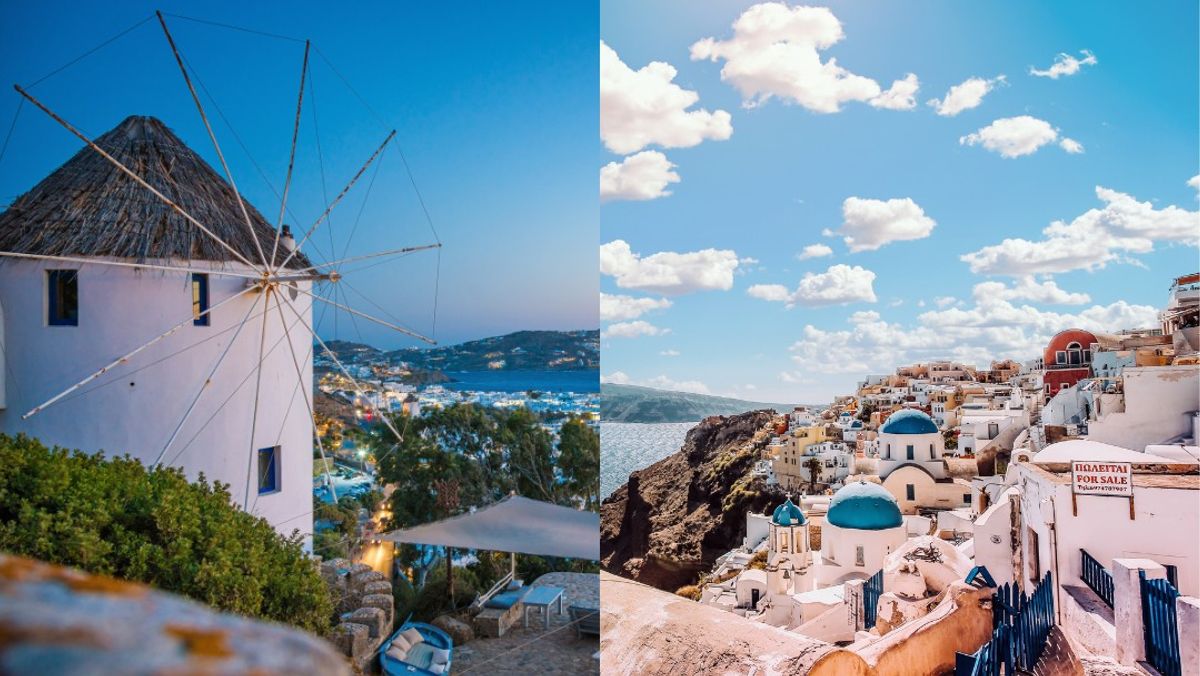
It is the question every first-time Greek islands sailor eventually asks. Two islands. Both iconic. Both wildly different. Both spectacular in ways that photographs fail to fully explain. Mykonos and Santorini sit at the top of every Cyclades wishlist, and for good reason. But experienced sailors know that visiting them by yacht is a fundamentally different experience from visiting them any other way. This guide breaks down the Mykonos vs Santorini debate from a sailor's perspective, covering the sailing, the anchorages, the atmosphere, and the honest question of which island rewards the effort more.
Two Icons, Two Completely Different Experiences
Before getting into the sailing specifics, it helps to understand what separates these two islands at a fundamental level.
Mykonos is a party island that has evolved into something more layered than that label suggests. Yes, there are clubs that run until morning and beach bars that charge more for a cocktail than some islands charge for dinner. But Mykonos also has a genuinely beautiful old town, a world-class restaurant scene, and a social energy that is intoxicating if you're in the mood for it and exhausting if you're not.
Santorini is a geological spectacle that has become, in some ways, a victim of its own drama. The caldera, the black sand beaches, the cliff-top villages of Oia and Fira, the sunsets that draw crowds so large they feel choreographed: all of it is real and all of it is remarkable. But Santorini is also one of the most visited islands in the entire Mediterranean, which means that experiencing it on its own terms requires either exceptional timing or a vessel that lets you sidestep the crowds entirely.
Which brings us to the yacht.
Sailing to Mykonos: What to Expect
The Approach
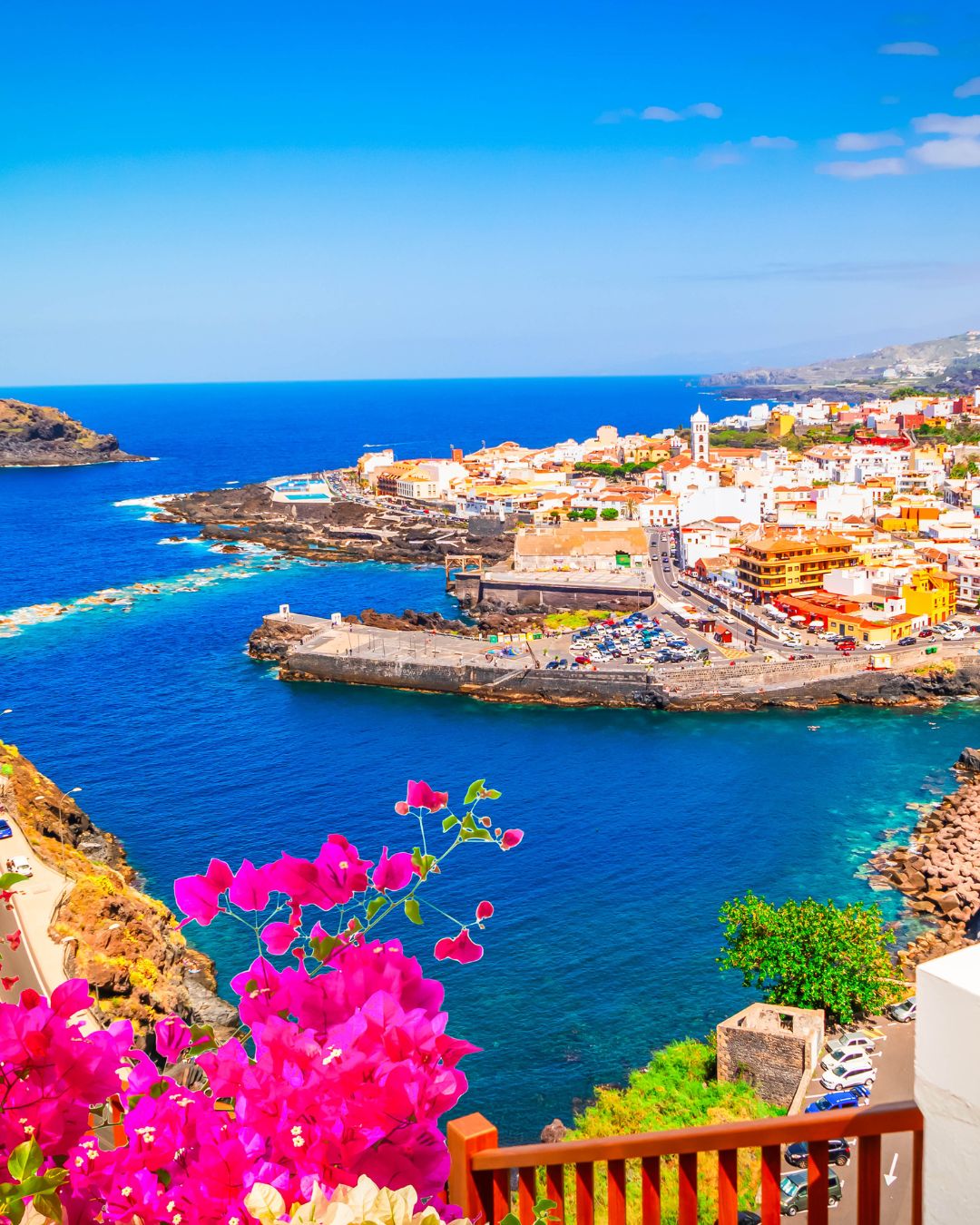
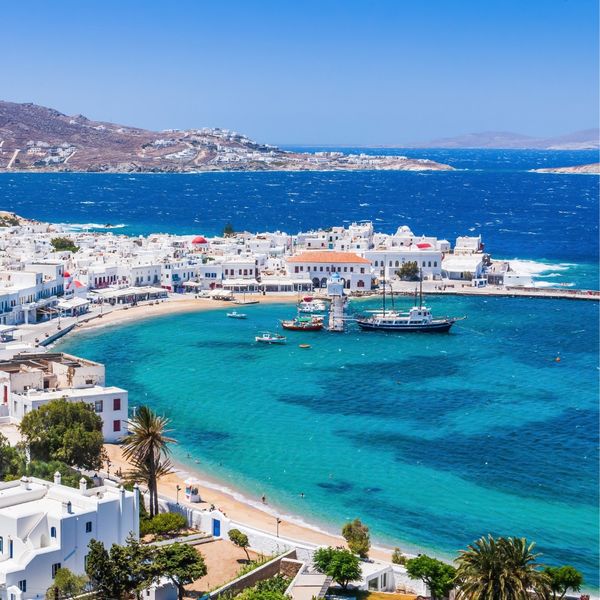
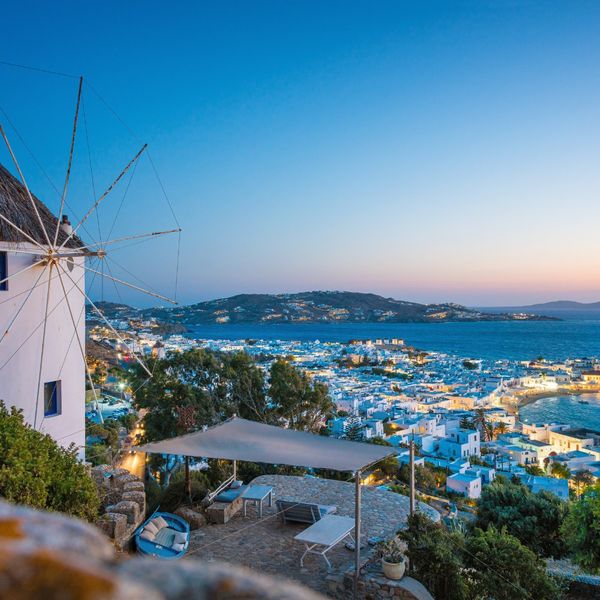
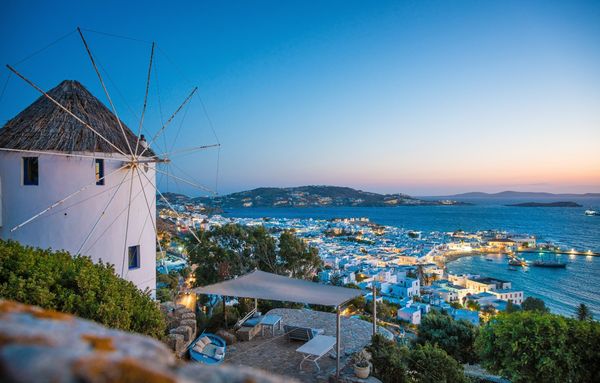
The approach to Mykonos from the south is one of the classic Aegean arrivals. The island rises dry and golden from the sea, its windmills visible from several miles out, the white cube buildings of Chora stacked above the waterfront like a cubist painting. In the right light, in the early morning before the day heats up, it is genuinely beautiful.
The meltemi wind, the notorious northerly that dominates the Aegean in summer, tends to be strong in the channel between Mykonos and Delos, the sacred uninhabited island that sits just to its west. Sailors approaching from the north should be prepared for a lively beat. Approaching from the south, with Naxos and Paros behind you, is generally more comfortable.
Anchorages and Mooring
Mykonos has a new marina at Tourlos, about two kilometres north of Chora, which offers full facilities including fuel, water, electricity, and shore power. It is well run and reasonably priced by Cyclades standards. Berths fill up quickly in July and August, and advance booking is strongly recommended for the peak season.
For those who prefer to anchor rather than go alongside, the bay at Ornos on the island's south coast offers good holding in sand and reasonable shelter from the meltemi. Agios Ioannis, further west, is quieter and particularly beautiful in the late afternoon when the light comes off the water at a low angle.
The old port in Chora is picturesque but exposed and not suitable for overnight stays in anything but the calmest conditions. It is, however, a convenient dinghy landing if you're anchored nearby and want to walk directly into town.
What a Yacht Charter Mykonos Itinerary Adds
A yacht charter Mykonos itinerary opens up the island in ways that land-based visitors simply cannot access. The most significant advantage is the ability to use the island as a base for day trips to Delos, the UNESCO-listed sacred island that was the religious centre of the ancient Aegean world and is now one of the most important archaeological sites in Greece.
Delos has no permanent accommodation and no overnight visitors. Day-trippers arrive on boats from Mykonos harbour, spend a few hours, and leave. On a yacht, you can arrive before the day boats, anchor off the island's small harbour, and walk the ruins in something approaching the quiet they deserve. The site is extraordinary: an entire ancient city preserved in dry Cycladic air, with mosaics still in the ground and columns still standing, all of it belonging to nobody and everybody.
Beyond Delos, a yacht lets you escape Mykonos's crowds entirely by sleeping at a nearby anchorage and coming into Chora for dinner or a night out, then retreating to the quiet of your own deck when you're ready. That balance of access and escape is the defining advantage of a yacht charter Mykonos approach.
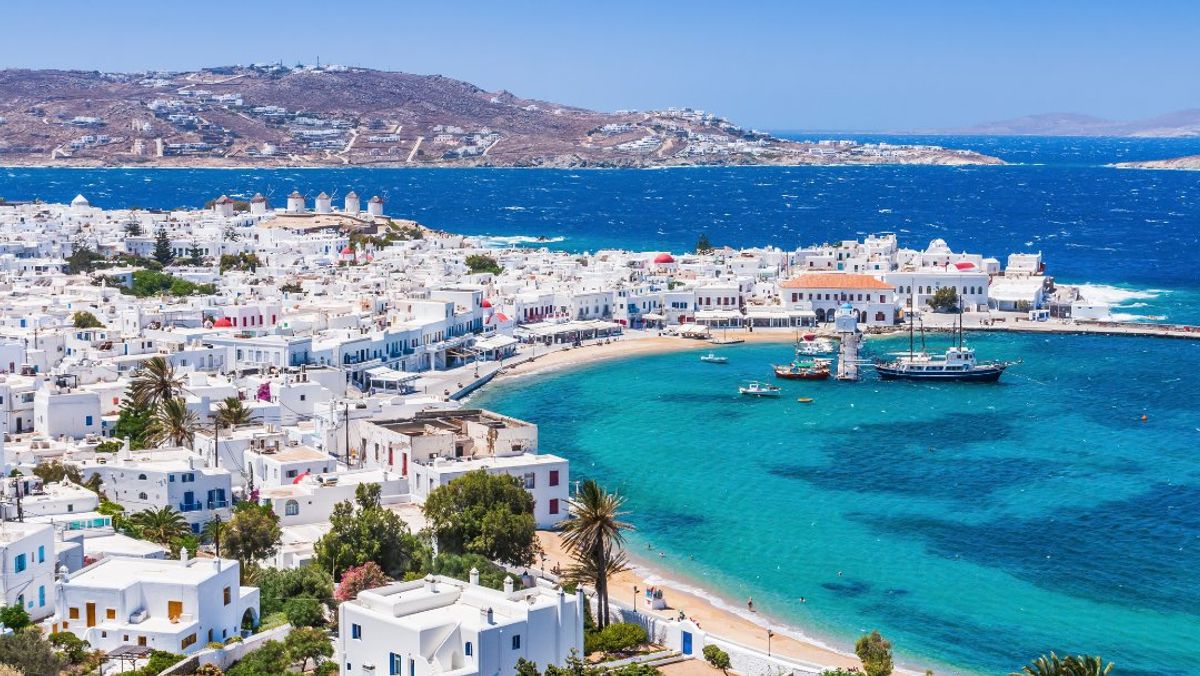
Mykonos, Greece. Panoramic view of Mykonos town, Cyclades islands.
Sailing to Santorini: What to Expect
The Approach
Nothing in the Mediterranean quite prepares you for the approach to Santorini's caldera. The island is the rim of a collapsed ancient volcano, and sailing into the caldera from the north through the channel between Thirasia and the main island is one of the most dramatic passages in all of sailing. The cliffs rise 300 metres above you on both sides. The water turns an impossible shade of dark blue. The white villages of Fira and Oia cling to the rim above like something from a dream of Greece rather than Greece itself.
This approach is best made in the morning, before the wind builds and before the cruise ships begin their procession into the anchorage. If conditions allow, timing your arrival at dawn is worth the early start.
Anchorages and Mooring
Santorini presents one of the more challenging anchoring situations in the Cyclades, and it is worth understanding before you arrive.
The caldera anchorage off Fira is deep, with notoriously poor holding in volcanic ash and pumice. Chains drag here regularly. Anchoring is possible, and many yachts do it, but it requires attention, a good scope, and ideally an anchor watch in strong conditions. The depths run to 30 metres and beyond close to shore, which limits your options.
There is a small marina at Vlychada on the island's south coast, outside the caldera, which offers more conventional facilities. It is well-sheltered but lacks the drama of arriving in the caldera itself. Most sailors who make the trip to Santorini are here for the caldera experience, so Vlychada tends to be used as a provisioning and transit stop rather than a base.
Thirassia, the smaller island on the caldera's western rim, offers an anchorage in the small harbour village of Korfos that is calmer, less crowded, and remarkably authentic compared to Santorini itself. Spending a night at Thirassia and taking the dinghy across to Santorini for dinner is one of the better moves available on a yacht charter Santorini itinerary.
What a Yacht Charter Santorini Itinerary Adds
The most significant advantage of a yacht charter Santorini visit is the ability to arrive and depart on your own schedule, bypassing the infrastructure that defines the experience for almost every other visitor.
Santorini receives over two million visitors per year. During the summer peak, the caldera is dotted with cruise ships offloading thousands of day-trippers at a time. The path from Fira down to the old port, once a donkey track, is now a cable car queue. The famous sunset viewpoint at Oia fills up hours before sunset with people jostling for position.
None of this applies to a yacht. You watch the sunset from your own deck, anchored in the caldera with a glass of local Assyrtiko wine, the cliffs turning from white to pink to gold above you, the water dark and still. You sail to the volcanic islets of Nea Kameni and Palea Kameni at the centre of the caldera, where hot springs warm the sea and the landscape looks like the surface of another planet. You anchor off the black sand beach at Perissa before the beach clubs open and swim in water so clear and warm it seems implausible.
The island itself, for all its crowds, is genuinely spectacular. Arriving on it by yacht simply means you experience the spectacle rather than the queue.
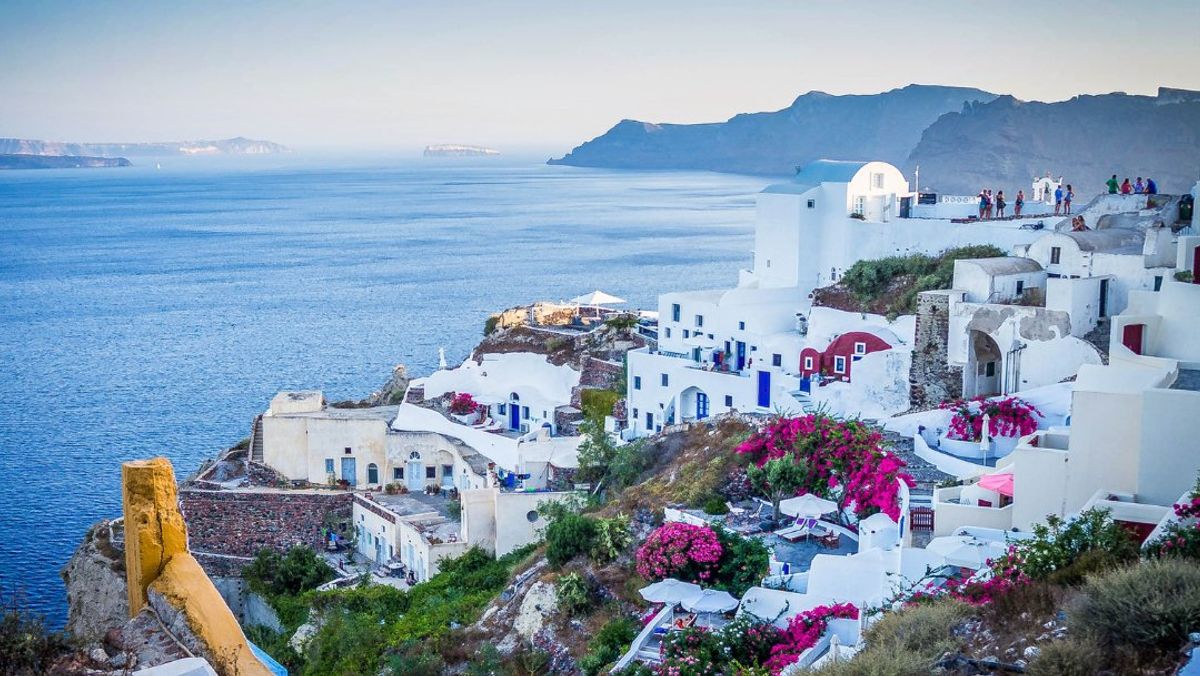
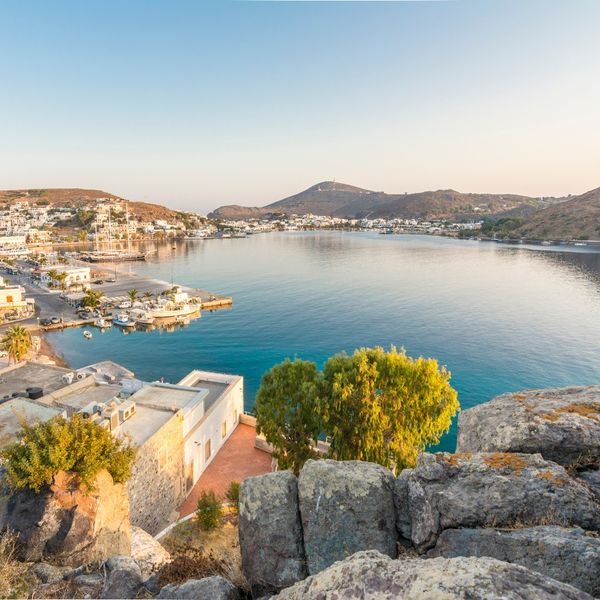
Village in Santorini
Mykonos vs Santorini: A Sailing Comparison
Sailing Conditions
Both islands sit in the heart of the Cyclades and are subject to the meltemi, but their geographies create meaningfully different conditions.
Mykonos is more exposed. The channel between Mykonos, Delos, and Tinos is one of the windier stretches in the central Aegean, and the meltemi can arrive with force and little warning in high summer. Experienced sailors handle it easily, but it is worth respecting. The reward is that the same wind makes for fast, exhilarating passages between Mykonos and the nearby islands of Paros, Naxos, and Syros.
Santorini's caldera offers exceptional shelter. Once inside, you are protected from the meltemi on almost all sides, and the anchorage can be remarkably calm even when it's blowing hard outside. The passage south from Ios to Santorini, however, can be rough in strong meltemi conditions, and the approach through the northern channel into the caldera requires care.
In the Mykonos vs Santorini sailing comparison, Mykonos wins on variety and range, with better access to the wider Cyclades chain. Santorini wins on the drama and shelter of the caldera itself.
Anchorage Quality
Mykonos has better holding ground and more reliable anchorage options around the island. The choice of bays, from the social atmosphere of Ornos to the quieter coves on the north coast, gives sailors flexibility.
Santorini's caldera anchorage is problematic in terms of holding but unmatched in terms of experience. The anchorages outside the caldera are more conventional and perfectly adequate. Overall, Mykonos is the easier island to anchor at, but Santorini's caldera is the one experience you'll remember longest.
Nightlife and Social Scene
There is no contest here. Mykonos is one of the world's great party destinations, and that reputation is entirely deserved. Nammos, Scorpios, Cavo Paradiso: the beach clubs and nightlife venues that line its south coast are genuinely exceptional if that is what you are looking for. The old town of Chora, with its labyrinthine lanes full of restaurants and bars, is one of the most atmospheric nightlife settings in the Mediterranean.
Santorini's nightlife exists but is more subdued. The emphasis is on sunsets, wine, and dinner rather than dancing until dawn. For couples or groups looking for a more romantic, gastronomic experience, Santorini wins. For those who want energy and social atmosphere, Mykonos is not even close.
Food and Drink
Both islands punch above their weight, but in different directions.
Mykonos has attracted serious restaurant talent, and the dining scene now rivals anything in Athens. The fish tavernas in the old town, the fine dining restaurants overlooking Little Venice, the beach club menus that are better than they have any right to be: eating well on Mykonos is easy, and doing it from a yacht dinghy-tied to the Chora waterfront is the proper way.
Santorini has one of the most distinctive local food and wine identities in all of Greece. The island's volcanic soil produces wines, particularly the white Assyrtiko grape, that are unlike anything grown elsewhere in the world: mineral, saline, and searingly dry. The local cherry tomatoes, white aubergines, and fava beans are farmed in conditions unique to the island. Eating at a caldera-view restaurant with a bottle of local wine as the sun drops behind Thirassia is a specific kind of pleasure that has no equivalent on Mykonos.
Crowds and Atmosphere
This is where the Mykonos vs Santorini debate gets most honest.
Mykonos is crowded in summer, but its crowds are largely there for the same things you are: the beaches, the food, the nightlife. The social density is part of the atmosphere, not an obstacle to it.
Santorini's crowds are of a different character. The island receives a disproportionate number of day-trippers from cruise ships, which means that between roughly 10am and 5pm, the village streets of Fira and Oia are genuinely overwhelming. The tourist infrastructure, the donkey rides, the selfie spots, the souvenir shops: all of it is concentrated in a very small area on a very small island.
A yacht neutralises most of this. You don't need to be in Oia at sunset. You don't need to walk the cable car queue. You experience Santorini from the water and dip into the village when you choose to, rather than being channelled through it.
Which Island Should You Choose?
The honest answer is that the Mykonos vs Santorini question depends entirely on what you want from your charter week.
Choose Mykonos if you want energy, variety, excellent sailing in the wider Cyclades, a world-class social and dining scene, and the extraordinary bonus of Delos next door. A yacht charter Mykonos itinerary can be as active or as quiet as you make it, and the island rewards both approaches.
Choose Santorini if you want one of the most dramatic natural experiences in all of sailing, a wine and food culture unlike anywhere else in Greece, and a romantic, visually stunning setting that genuinely lives up to its reputation. A yacht charter Santorini itinerary is less about variety and more about depth: the caldera deserves at least two nights, and the island around it rewards slow exploration.
The best answer, of course, is both. The sailing distance between Mykonos and Santorini is roughly 80 nautical miles, which is a comfortable day's passage in a decent breeze. A one-week charter from Mykonos to Santorini, stopping at Paros, Naxos, or Ios along the way, is one of the finest weeks available to a sailor anywhere in the world. The two islands are not rivals. They are the beginning and the end of the same perfect sentence.
Practical Tips for Sailing Mykonos and Santorini
Book marina berths early. Both Tourlos marina in Mykonos and Vlychada in Santorini fill up for July and August by April or May. If your charter dates are fixed, get your berth reservations in early or have a backup anchoring plan.
Respect the meltemi. The northerly wind that defines Aegean sailing in summer can accelerate to Force 6 or 7 in the Cyclades channels. Check forecasts daily, build flexibility into your itinerary, and never plan passages that require a specific arrival time in strong meltemi conditions.
Use both islands as bases, not just destinations. Each island is the gateway to a cluster of less-visited neighbours. From Mykonos, Delos and Tinos are unmissable. From Santorini, Thirassia, Ios, and Folegandros offer relief from the crowds and sailing experiences that more than justify a short passage.
Time your caldera arrival. Arriving in Santorini's caldera in the early morning, before the cruise ships, is a categorically different experience from arriving at midday. The light is better, the anchorage is quieter, and the cliffs above Fira have a stillness that disappears as the day progresses.
Carry cash. Both islands are heavily touristed and prices reflect that. Budget generously for fuel, marina fees, and dining, and treat any meal under 20 euros a head as the pleasant surprise it is.
The debate between Mykonos and Santorini is one of the great arguments of Greek island sailing. The good news is that it's the kind of argument that can only be resolved one way: by going to both, arriving by sea, and deciding for yourself.
Ready for an Unforgettable Yacht Charter in Greece?
At All Blue Yachting, our expertise comes from genuine experience at sea. Many of our brokers have lived and worked aboard yachts themselves, giving them first-hand insight into every aspect of the charter experience.
From your initial enquiry to the final day of your journey, we’re here to guide you through every step with trusted advice, personalised recommendations, and seamless support throughout your charter.
- We take the time to understand your vision and bring it to life.
- We handpick the finest yachts tailored to your preferences.
- We manage all paperwork and secure transactions for complete peace of mind.
- We design personalised itineraries built around your travel style.
- We support you every step of the way, from enquiry to final accounts.